- Home
- Installations
- Electric underfloor heating
Installations
Electric underfloor heating with Shelly
Control an electric heating mat with a floor probe – one relay per room.
Updated: October 2026
A heating mat or cable is cast into the floor of a single room – typically a bathroom or kitchen – and there is usually an existing thermostat position with a back-box on the wall.
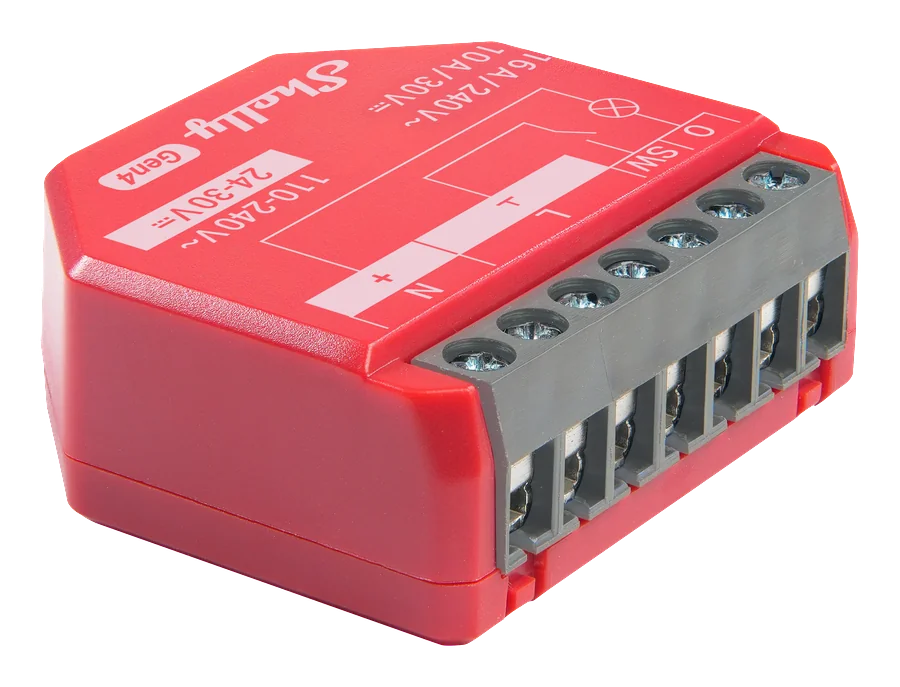
In-wall. Switches up to 16 A / 3,680 W with power metering. One per room.
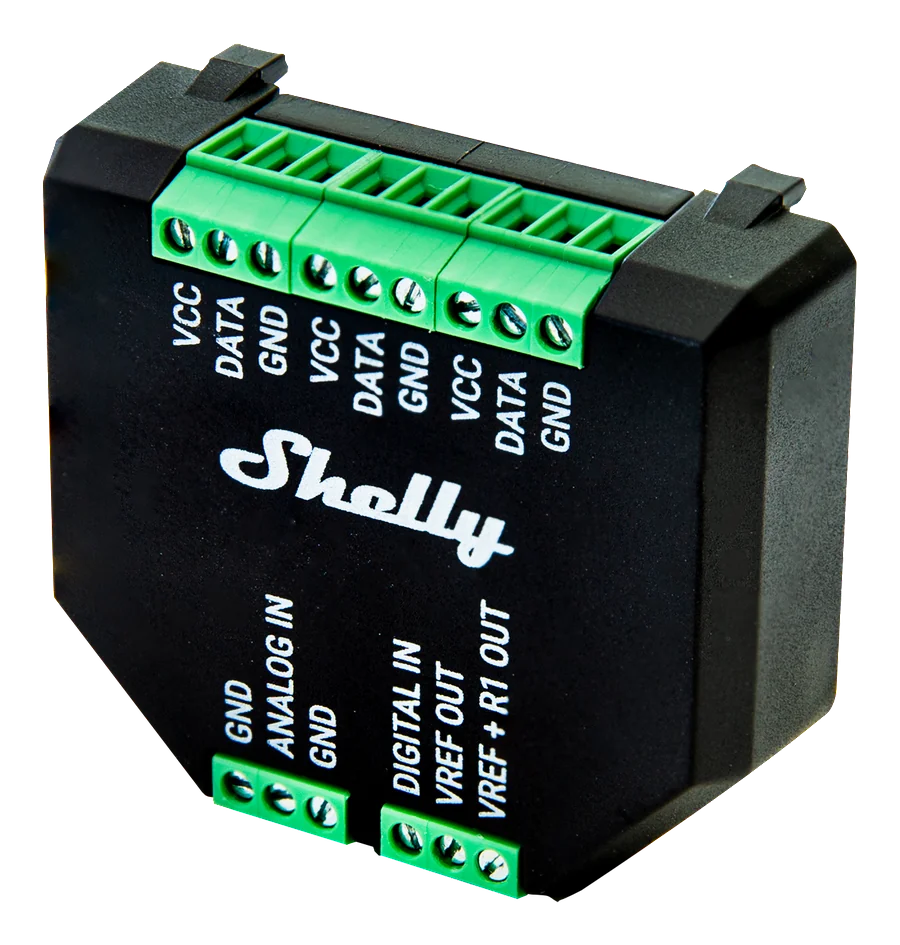
Clips onto the relay and reads a DS18B20 floor probe.
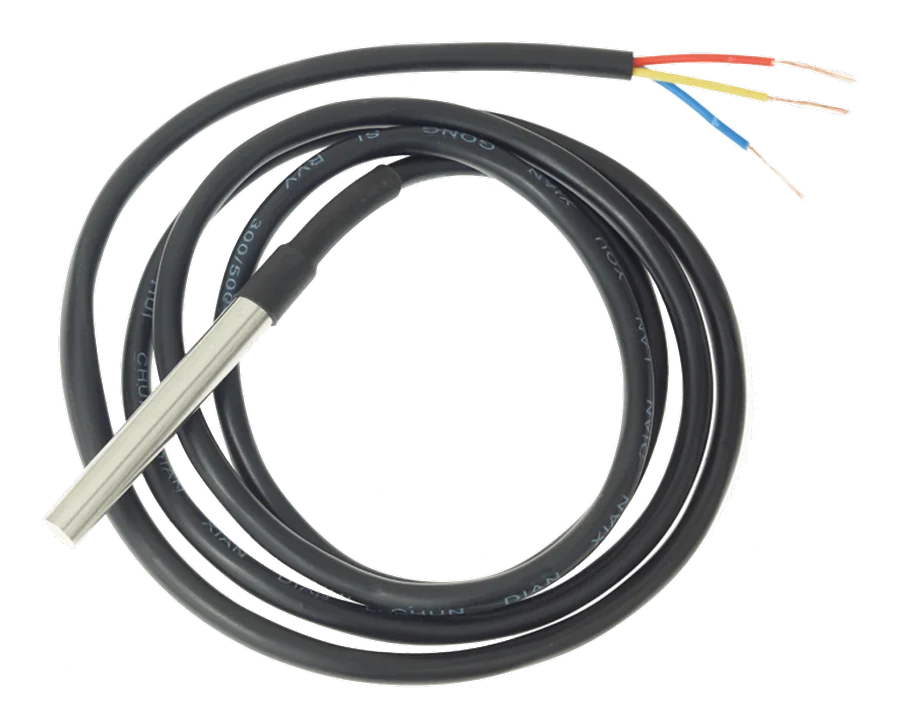
Digital floor probe. Run it in a sensor tube.
Shelly 1PM Gen4 switches up to 16 A / 3,680 W, fits a standard back-box and reports real power. One device per room keeps the wiring short and lets every room run its own schedule.
Check the mat rating first: a 10 m² mat at 150 W/m² draws about 6.5 A, well inside the relay, but a large open-plan floor can exceed 16 A and needs splitting across two circuits.
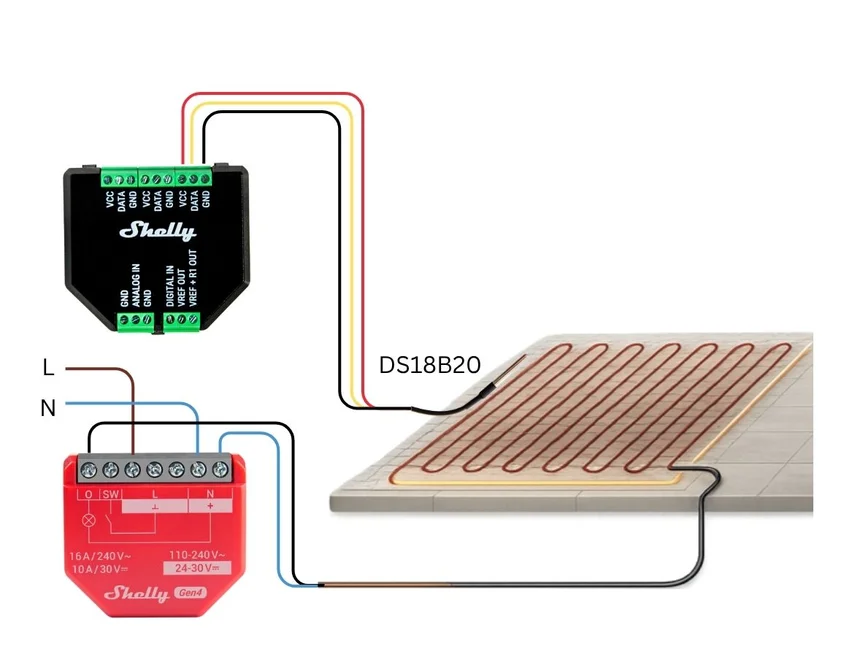
Fit a floor probe, not just a room sensor
Electric heating warms the surface directly, so surface temperature is the variable that matters. Without a floor probe you risk cooking sensitive flooring, and a room sensor alone cannot promise a warm floor on a cold morning.
Run the probe in a sensor tube with a plugged end so it can be replaced without breaking up the floor, and keep it midway between two heating loops — never on top of one.
- L
- Line in, 110–240 V AC
- N
- Neutral
- O
- Output to the heating element
- SW
- Optional manual switch input
- VCC
- DS18B20 red — 3.3 V supply
- DATA
- DS18B20 yellow — 1-Wire data
- GND
- DS18B20 black — ground
Create the thermostat with the floor probe as the sensor. In Advanced settings, set the maximum temperature to 27 °C for wood floors, so nobody can set the floor warmer than parquet and engineered board tolerate – and check the flooring manufacturer’s figure, since some are lower.
Tips & best practices
- Use both sensors. Floor probe as the safety limit, room sensor as the comfort target.
- Night setback pays for itself. Dropping 2–3 °C overnight cuts consumption without losing morning comfort – as long as recovery starts early enough for a slow floor.
- Tie heating to the spot price. Pre-heat in cheap hours and coast through the expensive ones. See live electricity prices.
- Keep the existing wall thermostat if you want – wire it into
SWas a manual override, or leave it set to maximum. Do not put both in series and expect predictable behaviour.